Aftermath: Hurricane Katrina
https://m.youtube.com/watch?v=5KA7pclcxBA
Tuesday, December 15, 2015

Monday, December 14, 2015
Restoration, Culture, and How the City Speaks.
Restoration
In August of 2005, Hurricane Katrina hit land and devastated
the central gulf coast, including the city of New Orleans. Around 80% of the
city was flooded prior to the availability of levee repairs and emergency
drainage pumps. The city’s residential areas, commercial buildings, and other
infrastructures were contaminated with sediments that were deposited through
the floodwaters. Microbial growth occurred due to the moisture, high humidity,
and high temperatures in the area. Immediately after the hurricane hit, surveys
were conducted to determine the environment of the city with a focus on
microbial contamination in the air, dust, and materials of damaged buildings.
It was found that levels of contaminants were generally elevated, often
extremely. The levels of inside air had higher levels of contaminants than
those in the surrounding atmosphere. Restoration of the city after the
aftermath of Hurricane Katrina is still continuing today, 10 years later. Because
restoration workers were at risk for different respiratory illnesses from
exposure to airborne particles and microbial agents, an exposure assessment was
performed. The assessment focused on restoration work including demolition,
trash and debris management, landscape restoration, sewer and waterline repairs,
and mold remediation. The most significant exposures were related to demolition
work, with 17.6% of respirable dust exposures exceeding the permissible
exposure limit according to Occupational Safety and Health Administration
standards. Exposure to the contaminants from the aftermath of the hurricane
have been linked to cases of upper and lower respiratory issues including
rhinitis, hayfever, toxic pneumonitis, ‘Katrina Cough,’ pneumonia, and
exacerbation or initiation of asthma. After the first year of restoration of
the aftermath of Hurricane Katrina, exposure to thoracic dust greatly decreased
and then gradually decreased and stabilized through 2012. (Rando, Kwon, &
Lefante, 2014).
 Hurricanes Katrina, Rita, and Wilma left nearly 4.5 million
people in need in 2005. Restoration of the city after the hurricane focused on
providing people with basic needs, such as food, and shelter. Since the
hurricane hit, residential areas have been rebuilt, schools have been reopened,
and businesses have been rebuilt. However, there is still much more work to do.
Millions of individuals, foundations, and corporations stepped up to help those
in need. The American Red Cross received nearly $2.2 billion in monetary
contributions. More than 87% of this money was spent during the initial phase
of restoration and recovery response. That is $1.9 billion spent to provide
shelter and food to the survivors of the hurricanes. Survivors of the
hurricanes dispersed to almost every state, the District of Columbia, and
Puerto Rico, and the U.S. Virgin Islands. More than 1,400 emergency shelters
were set up within 31 states and the District of Columbia. The American Red
Cross states that more than 68 million hot meals and snacks were served to
evacuees and responders. The Red Cross assisted 1.4 million families or about 4
million people with purchasing urgently needed items such as food, water,
clothing, etc. Physical and mental health services were made available by the
American Red Cross to aid in the care of the hurricane survivors. Trained
mental health professionals were available at shelters and service centers to
help individuals affected by the hurricanes cope with stress, loss, and trauma.
Other health care professionals delivered emergency first aid and helped to
obtain prescription medications that individuals lost through the hurricane.
The American Red Cross also provided additional support by coordinating damage
and community needs assessments and support of the disaster welfare inquiry
system, which assists families to reconnect with each other. The American Red
Cross did not only help those affected by the hurricane in the immediate
period. They understood that people would need years of help in order to regain
their normal lives and cope with the losses that they endured. The Red Cross
provided long-term recovery programs to help the individuals. The Hurricane
Recovery Program helped assist providers to develop a recovery plan and
identify and make use of the resources within their community. Although the hurricane presented many
challenges for the Red Cross, they were able to use the challenges as a
learning experience about recovery and preparedness for the future. The Red
Cross has improved since Hurricane Katrina by increasing the number of trained
individuals that will volunteer to disasters. The number has increased by
nearly four times the amount of trained volunteers since 2005. The Red Cross
established a warehouse system that provides residents of disaster shelters
with blankets, cots, and other needed supplies. The Red Cross has improved the
coordination with the government at the local, state, and federal levels. (American
Red Cross, 2010).
Hurricanes Katrina, Rita, and Wilma left nearly 4.5 million
people in need in 2005. Restoration of the city after the hurricane focused on
providing people with basic needs, such as food, and shelter. Since the
hurricane hit, residential areas have been rebuilt, schools have been reopened,
and businesses have been rebuilt. However, there is still much more work to do.
Millions of individuals, foundations, and corporations stepped up to help those
in need. The American Red Cross received nearly $2.2 billion in monetary
contributions. More than 87% of this money was spent during the initial phase
of restoration and recovery response. That is $1.9 billion spent to provide
shelter and food to the survivors of the hurricanes. Survivors of the
hurricanes dispersed to almost every state, the District of Columbia, and
Puerto Rico, and the U.S. Virgin Islands. More than 1,400 emergency shelters
were set up within 31 states and the District of Columbia. The American Red
Cross states that more than 68 million hot meals and snacks were served to
evacuees and responders. The Red Cross assisted 1.4 million families or about 4
million people with purchasing urgently needed items such as food, water,
clothing, etc. Physical and mental health services were made available by the
American Red Cross to aid in the care of the hurricane survivors. Trained
mental health professionals were available at shelters and service centers to
help individuals affected by the hurricanes cope with stress, loss, and trauma.
Other health care professionals delivered emergency first aid and helped to
obtain prescription medications that individuals lost through the hurricane.
The American Red Cross also provided additional support by coordinating damage
and community needs assessments and support of the disaster welfare inquiry
system, which assists families to reconnect with each other. The American Red
Cross did not only help those affected by the hurricane in the immediate
period. They understood that people would need years of help in order to regain
their normal lives and cope with the losses that they endured. The Red Cross
provided long-term recovery programs to help the individuals. The Hurricane
Recovery Program helped assist providers to develop a recovery plan and
identify and make use of the resources within their community. Although the hurricane presented many
challenges for the Red Cross, they were able to use the challenges as a
learning experience about recovery and preparedness for the future. The Red
Cross has improved since Hurricane Katrina by increasing the number of trained
individuals that will volunteer to disasters. The number has increased by
nearly four times the amount of trained volunteers since 2005. The Red Cross
established a warehouse system that provides residents of disaster shelters
with blankets, cots, and other needed supplies. The Red Cross has improved the
coordination with the government at the local, state, and federal levels. (American
Red Cross, 2010).
Before the winds of the hurricane had subsided, local public
works departments and state rural water associations had begun to determine the
damages and locate specific areas of breaks and leaks. They also began to
deliver necessary equipment such as generators and water tanks. As stated in a
previous section, communication was difficult during the time immediately after
the hurricane hit. However, an official from the public works borrowed a radio
to call in urgent supply requests. Water technicians were so quick to respond
to calls that they were often the first responders at the scene, bringing items
such as bottled water and meals. Through all of the response efforts, water
managers were able to restore water access for several communities within a
matter of days. However, utility companies were not able to restore power in a
lot of the same areas for over a week more. (Worboys & Applegarth, 2006).
Works Cited
American National Red Cross. “Bringing Help, Bringing Hope:
The American Red Cross Response to
Hurricanes Katrina, Rita, and
Wilma.” (2010). Web. 10 Dec. 2015
Rando, Roy J., Cheol-Woong Kwon, and John J. Lefante. “Exposures
to Thoracic Particulate Matter,
Endotoxin, and Glucan During
Post-Hurricane Katrina Restoration Work, New Oleans 2005-
2012.” Journal of Occupational & Environmental Hygiene 11.1 (2014):
9-18 10p. CINAHL
Complete.
Web. 8 Dec. 2015
Worboys, Ktherine J., and Claire Applegarth. “Recent
Research From Lessons Learned Information
Sharing: The Importance of
Partnerships in the Rural Water Response to Hurricane Katrina.
(Cover Story).” Journal of Environmental Health 69.2
(2006): 31-33. Academic Search Complete.
Web. 10 Dec. 2015
Culture
 Hurricane Katrina caused a huge physical devastation to the
Gulf Coast, especially New Orleans because of the distinct culture that
includes Mardi Gras, jazz, jazz funeral traditions, parades, and local cuisine.
As New Orleans is a city with one of the most significant African American
residence, the city is a place that enjoys art and music that represents the
American society. The cultural consequences of the hurricane come from the loss
of half of the city’s population as they relocated and evacuated to safer
areas. As culture is a way of life, it is thought that culture is among the
major aspects that were destroyed during Hurricane Katrina. Homes were
destroyed, businesses such as local restaurants with distinct cuisine were
destroyed and shut down. The culture of the city includes the domestic
architecture, public monuments, and community symbols. However, the folk
culture of New Orleans is not based off of the texts, or images, or objects of
the city, but rather the experiences of performances and traditions. With the
physical devastation of the city, it was hard to maintain such traditions
through the recovery period. The essence of the New Orleans culture will never
be the same as it was before. (McKernan & Mulcahy, 2008).
Hurricane Katrina caused a huge physical devastation to the
Gulf Coast, especially New Orleans because of the distinct culture that
includes Mardi Gras, jazz, jazz funeral traditions, parades, and local cuisine.
As New Orleans is a city with one of the most significant African American
residence, the city is a place that enjoys art and music that represents the
American society. The cultural consequences of the hurricane come from the loss
of half of the city’s population as they relocated and evacuated to safer
areas. As culture is a way of life, it is thought that culture is among the
major aspects that were destroyed during Hurricane Katrina. Homes were
destroyed, businesses such as local restaurants with distinct cuisine were
destroyed and shut down. The culture of the city includes the domestic
architecture, public monuments, and community symbols. However, the folk
culture of New Orleans is not based off of the texts, or images, or objects of
the city, but rather the experiences of performances and traditions. With the
physical devastation of the city, it was hard to maintain such traditions
through the recovery period. The essence of the New Orleans culture will never
be the same as it was before. (McKernan & Mulcahy, 2008).
Although the hurricane wiped out much of the city, including
cultural aspects, the city has also gained when it comes to culture. The
tragedy of Hurricane Katrina adds history to the city including the community
effort to restore the normal living situations and other historical aspects of
New Orleans. It gives the city an opportunity to have a fresh start and rebuild
on their culture based off of new landscape, businesses, housing, etc. There
are several interventions and ideas that can be done in order to regain a sense
of the culture of New Orleans. Tourism can become a fix for the city’s economy
with the French Quarter, Garden District, and Uptown neighborhoods to bring in
tourists and individuals who want to live in the areas. A simple matter of restoring
the confidence of visiting the city in tourists can help build on the culture
and economy of the city. (McKernan & Mulcahy, 2008).
Works Cited
McKernan, Jerry, and Kevin V. Mulcahy. “Hurricane Katrina: A
Cultural Chernobyl.” Journal of Arts
Management, Law & Society 38.3
(2008): 217-232. Academic Search Complete. Web. 9 Dec.
2015.
How the city speaks
The city of New Orleans is a very unique city with a lot of
rich history, experiences, and cultural aspects. Hurricane Katrina was
devastating when nearly 80% of the city was flooded, destroying homes, local
businesses, restaurants, landscape, etc. The response of the city says a lot
about the city and the importance of restoring the different aspects of the
city to renew the unique culture and living of the city. As stated before, the
American Red Cross, partnering organizations, and individual people all
volunteered to assist in restoring the city in order to provide the citizens a
way to regain their normal lives and eventually maintain and improve the
culture of the city once again. The efforts to restore the city and the
cultural influences within the city was significant by attempting to restore
landmarks such as local restaurants that influence the culture, monuments, art,
music, and experiences such as Mardi Gras, parades, etc. (American National Red
Cross, 2010).
Works Cited
American National Red Cross. “Bringing Help, Bringing Hope:
The American Red Cross Response to
Hurricanes Katrina, Rita, and
Wilma.” (2010). Web. 10 Dec. 2015
Our Right to Survive

Prior to the disaster that struck in August 2005, New Orleans maintained a vast population of poor and African American. The city also ranked as one of the country’s highest uninsured rates and many relied on the Charity Hospital system for health care. Louisiana also had some of the poorest health statistics in the country, with high rates of infant mortality, heart disease, diabetes and aids. Flooding forced the evacuation of more than one million people along with the closure of many New Orleans area hospitals. After Hurricane Katrina devastated New Orleans, the entire cities health care system changed, leaving many residents without access to care for more than a year after.


With unstable living and financial situations, people were
having difficulty meeting not only their basic needs before the storm, but
connecting with assistance after the storm.
 The damage of the storm resulted in more than 1,500 lives
lost, 780,000 people displaced, 850 schools damaged, 200,000 homes destroyed,
18,700 businesses destroyed, and 220,000 jobs lost. The majority of the population
that was affected negatively by the storm were African Americans with poor
socio-economic status. Most had extremely low incomes, low educational levels,
no bank accounts or available credit cards, and no transportation or savings to
facilitate evacuation. Chronic health conditions were common among this
population and without adequate health insurance, many relied on Charity
Hospital for their health care. After the storm, people reported that they had
been trapped in their homes, living on the streets or an overpass for an
inhumane amount of time without food, fresh water, medication or medical care.
The damage of the storm resulted in more than 1,500 lives
lost, 780,000 people displaced, 850 schools damaged, 200,000 homes destroyed,
18,700 businesses destroyed, and 220,000 jobs lost. The majority of the population
that was affected negatively by the storm were African Americans with poor
socio-economic status. Most had extremely low incomes, low educational levels,
no bank accounts or available credit cards, and no transportation or savings to
facilitate evacuation. Chronic health conditions were common among this
population and without adequate health insurance, many relied on Charity
Hospital for their health care. After the storm, people reported that they had
been trapped in their homes, living on the streets or an overpass for an
inhumane amount of time without food, fresh water, medication or medical care.  In the aftermath of Hurricane
Katrina, displaced residents of New Orleans and the Gulf Coast (a predominantly
African American population), had been subject to conditions that affected
human survival by prolonging internal displacement more than two years after
the hurricane. The U.S. Government
consistently denied residents their human right to housing through unjust policies
and programs that created a housing crisis and an unruly amount of homeless
people. The abusive treatment of hurricane evacuees by law enforcement and
military personnel had been documented, yet no action had been taken by the
Department of Justice to protect them. The
U.S. Department of Health and Human Services and other governmental authorities
had failed to re-open public health care facilities. With lack of access to
health care, the number of deaths continually increased. Arsenic contamination
of sediment and debris disposal had become burdensome among the African
American communities who had also been denied public health protection by the
U.S. Environmental Protection Agency.
In the aftermath of Hurricane
Katrina, displaced residents of New Orleans and the Gulf Coast (a predominantly
African American population), had been subject to conditions that affected
human survival by prolonging internal displacement more than two years after
the hurricane. The U.S. Government
consistently denied residents their human right to housing through unjust policies
and programs that created a housing crisis and an unruly amount of homeless
people. The abusive treatment of hurricane evacuees by law enforcement and
military personnel had been documented, yet no action had been taken by the
Department of Justice to protect them. The
U.S. Department of Health and Human Services and other governmental authorities
had failed to re-open public health care facilities. With lack of access to
health care, the number of deaths continually increased. Arsenic contamination
of sediment and debris disposal had become burdensome among the African
American communities who had also been denied public health protection by the
U.S. Environmental Protection Agency. 
The government’s failure to protect the rights of displaced
people, who are predominantly African American violated the Convention on the
Elimination of All Forms of Racial Discrimination (“CERD”) and is contrary to
the United Nations’ Guiding Principles on
Internal Displacement, which specifically prohibits ethnic cleansing and
racial discrimination. This document
recognizes the rights of individuals who remain in their country but are
uprooted from their communities as a result of natural or man-made disaster,
placing the responsibility to protect the health and well-being of these
individuals on the national governments.

The Federal Emergency Management Agency (“FEMA”) provided
temporary housing to displaced residents of the Gulf Coast. The Federal
Emergency Management Agency (FEMA) is an agency of the United States Department
of Homeland Security whose primary purpose is to coordinate the response to a
disaster that has occurred in the United States and that overwhelms the
resources of local and state authorities. The governor of the state in which
the disaster occurs must declare a state of emergency to implement FEMA and
federal response recovery actions. In response to Hurricane Katrina, the
governor of Louisiana declared a state of emergency in order for federal
response to begin. Housing provided
to the people were in the form of trailers that exposed residents to high levels
of formaldehyde contained in the cabinets and other furnishing. A Congressional
hearing exposed the fact that FEMA knew of the formaldehyde exposures and
attempted to suppress complaints by residents of serious health effects
triggered by the toxic chemical.


 African Americans who attempted to evacuate New Orleans were subjected
to a pattern of incarceration without due process. No formal charges were given
to these individuals and the opportunity to post bail or seek legal
representation was taken from them. Reports of inhumane conditions and abuse in
the prisons were documented. The inmates also suffered extensive sentences long
after their original sentence was completed.
African Americans who attempted to evacuate New Orleans were subjected
to a pattern of incarceration without due process. No formal charges were given
to these individuals and the opportunity to post bail or seek legal
representation was taken from them. Reports of inhumane conditions and abuse in
the prisons were documented. The inmates also suffered extensive sentences long
after their original sentence was completed.  Against tremendous opposition
from the U.S. Government, hurricane survivors are still struggling to return
home and rebuild their communities. The
people of this community have the right to rebuild their lives and their
communities as well as flourish among the vast population of survivors of the
aftermath of Katrina. The government is responsible to protect these rights and
assistance should be provided accordingly.
Against tremendous opposition
from the U.S. Government, hurricane survivors are still struggling to return
home and rebuild their communities. The
people of this community have the right to rebuild their lives and their
communities as well as flourish among the vast population of survivors of the
aftermath of Katrina. The government is responsible to protect these rights and
assistance should be provided accordingly.Ursula Thomas
Sunday, December 13, 2015
First Responders
Coast Guard and other military units, volunteers, and state and local first responders delivered thousands from death by drowning, dehydration, heatstroke, fire, starvation, and disease. At the state level, the Louisiana National Guard’s 1-244th Aviation Battalion and 812th Med-Evac unit moved helicopters—ten Black Hawks and six Hueys—into New Orleans behind the storm.

FEMA’s Michael Brown, Gov. Kathleen Blanco, and Mayor Nagin—had little if any role; in fact, because local communication was wiped out by the storm, they may not even have known about the scale and success of the rescue operation.


Dolinar, L. (2005). Katrina: The Untold Story. National Review, 57(19), 35-39.
Preparation & Evacuation
The city of New Orleans has long been considered “a disaster waiting to happen.” For those who prepare for, respond to, and study such events, the level of death and destruction wrought by Katrina was not outside the realm of possibility. Although a complete evacuation of the city has been the cornerstone of hurricane preparedness planning for the region, the highway evacuation plan used for Katrina evolved over a period of many years based on valuable lessons learned from prior storms in Louisiana and elsewhere.
Fortunately for New Orleans, officials in Louisiana were able to evaluate and refine their evacuation plan based on two “practice runs.” In 1998, Hurricane Georges appeared to be heading directly for the city, leading to the first major evacuation in some 20 years. From that experience, it was apparent that making conventional use of available routes in the region was not an adequate strategy. As a result, the Louisiana State Police (LSP) developed a plan to implement two short segments of contraflow (LSP, 2000).
Six years later, Hurricane Ivan threatened another direct hit on the city, triggering an implementation of the new plan and the first-ever implementation of evacuation contraflow in Louisiana. Like Georges, Ivan tracked east prior to landfall and largely missed Louisiana. The evacuation that it precipitated, however, revealed numerous deficiencies in the plan that resulted in monumental congestion and delays on several key evacuation routes.
After a period of considerable public criticism, the Louisiana Department of Transportation and Development (LA DOTD) and LSP formed a Louisiana Evacuation Task Force with input from consultants in industry and academia to identify where and how the congestion occurred and to develop and test ways to reduce it.
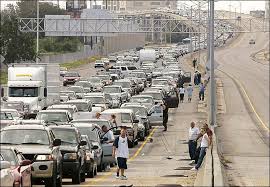


Fortunately for New Orleans, officials in Louisiana were able to evaluate and refine their evacuation plan based on two “practice runs.” In 1998, Hurricane Georges appeared to be heading directly for the city, leading to the first major evacuation in some 20 years. From that experience, it was apparent that making conventional use of available routes in the region was not an adequate strategy. As a result, the Louisiana State Police (LSP) developed a plan to implement two short segments of contraflow (LSP, 2000).
Six years later, Hurricane Ivan threatened another direct hit on the city, triggering an implementation of the new plan and the first-ever implementation of evacuation contraflow in Louisiana. Like Georges, Ivan tracked east prior to landfall and largely missed Louisiana. The evacuation that it precipitated, however, revealed numerous deficiencies in the plan that resulted in monumental congestion and delays on several key evacuation routes.
After a period of considerable public criticism, the Louisiana Department of Transportation and Development (LA DOTD) and LSP formed a Louisiana Evacuation Task Force with input from consultants in industry and academia to identify where and how the congestion occurred and to develop and test ways to reduce it.
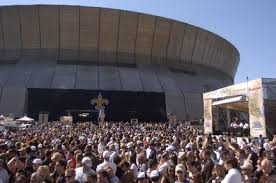
A major failure of the plans for evacuating the low-mobility population was the lack of communication. Evacuation plans can only be effective if people are aware of them, and evacuation orders can only be heeded if they are received in time. The of problem evacuating low-mobility populations will be one of the most important issues for all levels of government in future evacuation plans. Although some seek safety inside the Dome, which was allotted as the refuge of last resort.
Subscribe to:
Comments (Atom)